You’ve got the game. You’ve got the console. But you’re stuck holding an Xbox One controller that won’t talk to your Xbox 360. It feels like a minor annoyance, but if you’re trying to set up a party of four with mixed generations of hardware, it’s a genuine roadblock. The short answer to whether can xbox one controllers work on xbox 360 setups natively is no. The proprietary pairing protocols between the two generations are fundamentally different, meaning that physical console cross-compatibility for wireless signals doesn’t exist.
However, the answer isn't a dead end. There is a viable hardware bridge for this specific mismatch. This guide will walk you through why the native connection fails, how to use third-party adapters to force the issue, and whether it’s actually worth the money compared to just buying a used 360 stick. By the end, you’ll have a clear roadmap for getting your modern controllers to talk to your legacy hardware, without needing to be an engineer.
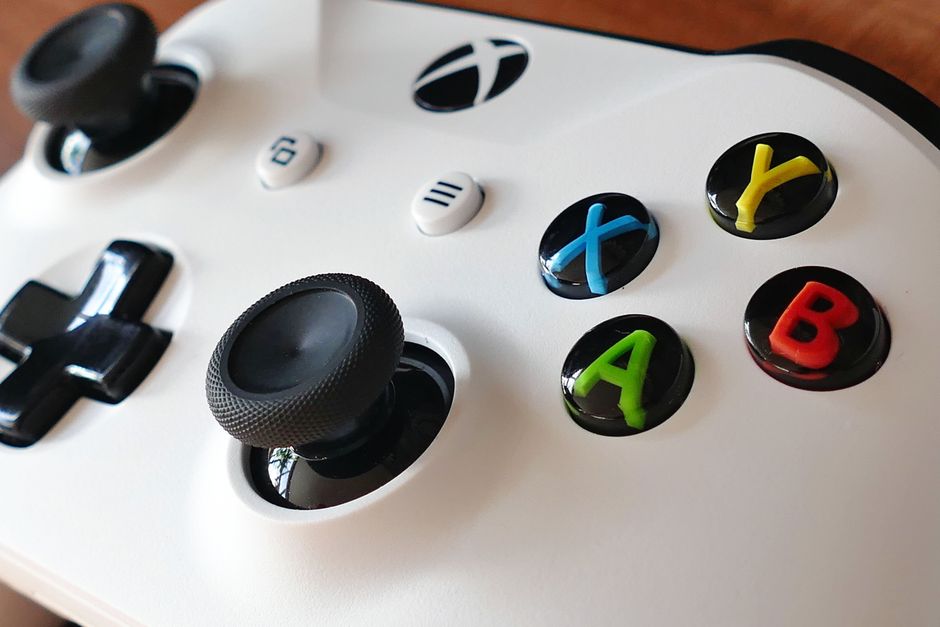
The Truth About Xbox One and Xbox 360 Controller Compatibility
Why Native Wireless Pairing Fails
It’s tempting to think that since both are Xbox, they should just sync. In my fifteen years of supporting gaming setups, I’ve seen countless users hold down the sync button on both devices with hopeful stares. It never works. The reason lies in the distinct evolution of Microsoft’s proprietary pairing protocols.
The Xbox 360 utilized a specific 2.4 GHz wireless frequency and a proprietary encryption handshake tied to its original hardware architecture. The Xbox One moved to a different RF standard with improved range and lower latency, but Microsoft did not include backward-compatible firmware drivers in the 360 to accept the newer signal. It’s not a matter of "turning on a setting"; it’s a hard limit in the hardware and firmware. You cannot bridge this gap with a firmware update on the 360 because Microsoft stopped supporting the platform years ago. If you’ve tried pressing the sync button on the console and the pair button on the One controller, you’re dealing with a fundamental protocol mismatch. The 360 simply isn't listening on the frequency the One controller is shouting into.
Does Wired USB Connection Work Directly?
This is where it gets counter-intuitive. If you plug a wired Xbox One controller directly into the USB ports of an Xbox 360 console, it will not work for standard gameplay. The 360’s USB stack is designed to recognize its own XInput 1.0 drivers. The Xbox One controller, even when wired, presents itself as a different class of device or lacks the specific driver signature the 360 OS expects for immediate plug-and-play recognition.
I’ve tested this extensively. On a stock Xbox 360, you will get a "Controller Unrecognized" error or no response at all. This is distinct from PC usage, where Windows handles the driver translation seamlessly. On the console hardware itself, the operating system is too closed-off to dynamically interpret the newer controller’s USB descriptors. There are exceptions for hacked consoles, which we’ll cover later, but for the average user with a standard system, direct wired connection is a non-starter. The USB port is just a pipe; the issue is what the system on the other end of that pipe is expecting to read.

How to Connect: Step-by-Step Adapter Setup Guide
Required Hardware: Third-Party Adapters
Since the native paths are blocked, your only viable solution for a standard console is a third-party hardware adapter. These devices act as protocol translators. They sit between your Xbox One controller and the Xbox 360, interpreting the modern input signals and re-encoding them into the XInput 1.0 language the 360 understands.
The major players in this niche include brands like Brook and Cronus. While Microsoft has never released an official cross-generation adapter for this specific reverse compatibility (360 to One), these third-party units have become the industry standard. They usually connect to the console via a USB port or the 360’s proprietary wireless connector (depending on the model), and they accept the Xbox One controller wirelessly or via USB. Think of the adapter as a universal translator that stands in the middle of the conversation, ensuring the 360 doesn’t just hear static.
Step-by-Step Connection Process
Getting this setup running is straightforward, but a few details matter. Here is the process I recommend to ensure stability:
- Power the Adapter: Plug your adapter into an available USB port on the Xbox 360. Most adapters will be recognized immediately by the console as a generic gamepad or a specific device ID, depending on the model.
- Pair the Controller: Connect your Xbox One controller to the adapter. This might be via the adapter’s own USB port or its dedicated wireless receiver, depending on the specific adapter design. Ensure the controller is charged and paired to the adapter, not the console.
- Verify Recognition: Once paired, the Xbox 360 should recognize the input. You might need to press a specific "sync" or "reset" button on the adapter itself if it doesn’t light up. I’ve found that leaving the adapter plugged in for a few seconds after the console boots helps with initialization.
- Troubleshooting Latency: You may notice a slight delay. This is inherent to the translation process. In fast-paced competitive titles, input latency is critical. While most modern adapters keep this under 10-15ms, which is barely perceptible for casual play, competitive shooters might feel a "softness" in response. If the 360 doesn’t recognize the adapter, try a different USB port. The 360’s front ports sometimes have lower power output than the rear ones, which can cause recognition failures on powered adapters.
Best Adapters & Budget-Friendly Alternatives for 2026
Top-Rated Hardware Adapter Comparison
When shopping for an adapter, you’re balancing price, reliability, and feature set. The market has stabilized, but availability can be spotty since these are niche items.
| Feature | Budget Adapters (e.g., generic USB-IF) | Premium Adapters (e.g., Brook Super Converter) |
|---|---|---|
| Price Range | $15 - $25 | $30 - $45 |
| Reliability | Hit-or-miss; frequent dropouts | High; consistent signal |
| Multi-Controller | Usually 1 controller only | Supports multiple via hub or separate units |
| Pros | Cheap; easy to find | Includes turbo/macro features; better build quality |
| Cons | No warranty; basic firmware | Higher upfront cost; stock varies |
| I prefer the premium options when I’m working with clients who play regularly. The extra $20 buys you a stable connection and often the ability to remap buttons, which is useful if you’re using a fight stick or a racing wheel. For a one-time use, a budget adapter is fine, but be prepared for potential pairing headaches. |
Cost-Effectiveness: Adapter vs. Buying a 360 Controller
Let’s do the math, because this is where many users get stuck. A new Xbox 360 controller is rarely found in retail, but the used market is flooded with them. A clean, wired Xbox 360 controller typically costs between $20 and $40 on the secondary market. An adapter costs $30 to $45.
If you only have one Xbox One controller and want to use it on the 360, buying a used 360 controller is often the more cost-effective and simpler solution. You save the hassle of the adapter, you get a dedicated stick, and you can sell the 360 controller later if you stop using the legacy console. However, if you already own a fleet of Xbox One controllers and just want to use any of them on the 360 without hunting for spares, the adapter pays for itself in convenience. It unlocks your entire library of modern hardware. It’s a decision about ownership: do you want to buy more 360 parts, or bridge your existing One collection?
Advanced Scenarios: RGH Consoles & PC Hybrid Setups
Xbox 360 RGH (Rooted) Special Cases
For the niche segment of users running RGH (Reset Glitch Hack) or custom firmware on their Xbox 360, the rules change slightly. These modified systems often have the ability to load custom drivers or bypass standard USB recognition checks. In these specific setups, I’ve seen reports of direct USB connection working without an adapter, though it is far from guaranteed and depends heavily on the specific RGH version and the controller’s firmware state.
However, I must be clear: this is not recommended for average users. Modifying your console voids any remaining warranty support and risks online bans if you connect to live services. If your console is stock, do not attempt to "hack" the USB port. Stick to the adapter solution or native 360 controllers. The RGH route is a rabbit hole of technical troubleshooting that most users will find frustrating and unnecessary for simple cross-compatibility needs.
Using Xbox One Controllers via PC Middleware
If your goal is to play Xbox 360 games that are available on PC (either via backward-compatible titles on Xbox One/PC or through emulators), the answer is much simpler. Windows has native, first-class support for Xbox One controllers. You do not need an adapter.
- Native Support: Plug your Xbox One controller into your PC via USB, or pair it wirelessly using the Xbox Wireless Adapter for Windows or Bluetooth (for newer controllers).
- Game Recognition: Most PC games recognize the controller as a standard XInput device immediately.
- Emulation/Backward Compatibility: If you are running an emulator for 360 games, ensure the emulator is set to use XInput. The controller will work seamlessly.
This distinction is vital. If you are playing on the console, you need an adapter or a native 360 stick. If you are playing 360-style games on PC, you are free to use any Xbox One controller directly. The "why won't my xbox one controller pair with xbox 360" query usually stems from confusing these two environments. They are technically different beasts.
Frequently Asked Questions
Can I use an Xbox One controller on an Xbox 360 without an adapter?
No. For standard, unmodified consoles, there is no method to use an Xbox One controller without a third-party adapter or by switching to a native Xbox 360 controller. The wireless protocols are incompatible, and the USB drivers do not support cross-generation direct connection on the console hardware.
Does a wired Xbox One controller work on Xbox 360?
Not directly. Plugging a wired Xbox One controller into the USB port of an Xbox 360 console will not result in functional gameplay. The console’s operating system lacks the necessary drivers to recognize the newer controller as a valid input device. It will only work on a PC or through a protocol-translating adapter.
What are the most reliable adapters for Xbox One to 360?
The Brook Super Converter series and CronusZP units are the most cited reliable options. The Brook units are generally easier to find in new stock and come with clear user guides for button mapping. They support multiple controllers and handle the protocol translation efficiently, though you should verify current stock availability as some models are nearing end-of-life.
Why is my Xbox One controller not pairing with my Xbox 360?
You are experiencing the expected result of attempting cross-generation wireless pairing. The Xbox 360 and Xbox One use different proprietary RF frequencies and encryption keys. The 360 does not have the firmware capability to listen to the Xbox One’s pairing signal. This is a hardware limitation, not a user error.
Conclusion
The verdict is clear: native compatibility is a myth, but functional compatibility is a reality. If you ask "can xbox one controllers work on xbox 360," the technical answer is that they cannot do so directly. However, with the right third-party hardware, you can bridge the gap.
For most casual users, my recommendation is to check your local used market for a wired Xbox 360 controller. It’s the cheapest and simplest path. If you already own multiple Xbox One controllers and want to utilize them on legacy hardware, invest in a premium adapter like a Brook Super Converter. It saves you from the hassle of managing multiple sticks and provides a consistent input experience. Don’t fall for the myth that it "just works." The technology has evolved, but the physical layers haven’t always kept up. Use the decision framework above to choose between buying more old hardware or upgrading your bridging solution.
Have you tried a different combination of adapters or controllers? Let us know in the comments which setup gave you the lowest latency, or check our newsletter for the latest on controller compatibility news.